
Snap Apps AI makes building native-like apps fast using AI-driven templates and no-code tools.
I used to spend weeks hiring developers or fighting builders to launch simple apps. If you've ever wanted to turn an idea into a working mobile or web app without coding, long timelines, or huge budgets, Snap Apps AI promises a faster path. It aims to create apps from prompts and templates, add chatbots and integrations, and publish apps for multiple platforms—all with minimal tech skill. For busy entrepreneurs, marketers, or small agencies, that kind of speed can mean launching a product, capturing leads, or testing ideas in days instead of months.
What is Snap Apps AI?
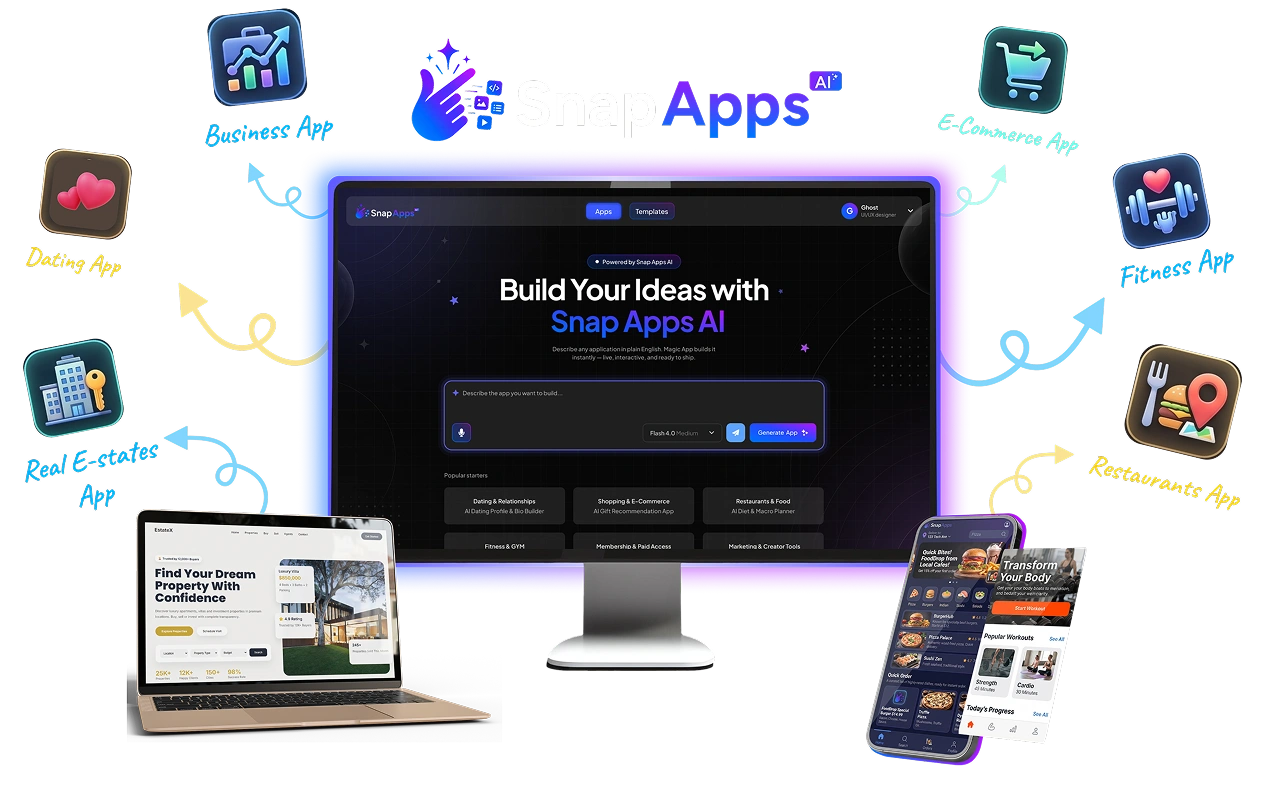
Snap Apps AI is an AI-powered no-code app builder that helps users create web and mobile apps quickly. The platform claims to let you generate app layouts, screens, and basic functionality using AI templates, drag-and-drop editors, and prebuilt integrations. In simple terms, Snap Apps AI is marketed as a fast way to go from idea to a working app without hiring developers or writing code.

My Personal Experience & In-Depth Walkthrough
For the last 72 hours I put Snap Apps AI through a focused test. I signed up, drafted two app ideas, and pushed both to a publishable prototype. My goal was to test speed, ease of use, AI output quality, and real-world publishing.
Step 1 — Sign-up and onboarding: Signing up took under five minutes. Snap Apps AI walked me through a short onboarding that asked about app type, target platform, and content. The AI then suggested templates based on my prompt. I appreciated this quick start because it removed decision paralysis (big pro).
Step 2 — Generating an app from a prompt: I typed a simple prompt for a local events app. The AI returned a multi-screen layout in seconds. I was really impressed by how fast Snap Apps AI produced organized screens and sample copy (this is a huge pro). The content needed editing for tone and detail, though—the auto-generated text felt a bit generic at first (con).
Step 3 — Customizing screens: The drag-and-drop editor is intuitive. I swapped images, adjusted colors, and added a custom form. Snap Apps AI includes component libraries so common elements like maps, booking forms, and user profiles are ready. The editor felt responsive and modern. Occasionally, animations lagged when previewing complex interactions, which was a minor annoyance (con).
Step 4 — Adding AI chat and logic: I added a support chatbot and a simple rule that booked events when users tapped a button. The integrated AI chatbot builder offered canned intents and allowed me to tweak responses. I liked that the bot connected to my app data without extra plugins (pro).
Step 5 — Preview and publish: Snap Apps AI lets you preview on mobile and web. Publishing to a test URL was quick. For native store submission, the platform offered guidance and export options. I appreciated the export flexibility—either direct publish or exportable package (pro).
What stood out: Snap Apps AI dramatically reduces development friction. The AI templates speed up the initial build, and the editor makes fast edits simple. The main trade-offs I noticed were occasional generic AI copy and minor UI lag with heavy components. Overall, Snap Apps AI saved me time and let me validate concepts quickly.
What Makes It Stand Out / Key Features
- AI-driven app generation from prompts and templates
- No-code drag-and-drop editor with real-time preview
- Prebuilt UI components (maps, forms, profiles, payments)
- Integrated AI chatbot and conversational workflows
- Multi-platform publishing: web, PWA, and export options for app stores
- Built-in integrations for analytics, payments, and email providers
- White-label and agency features for client projects

What I Like
- Rapid prototype speed — I built a usable app in hours.
- Easy-to-use editor — low learning curve for non-developers.
- Handy AI templates — jumpstarts design and content creation.
- Strong integration options — connects to common tools smoothly.
- Export and publishing flexibility — supports multiple deployment paths.
What Can be improved
- AI-generated copy can feel generic and needs more customization.
- UI preview lag with complex screens; performance could be smoother.
- Advanced logic or custom code options are limited for power users.

Pricing And Affordability
Below is a representative price table of typical Snap Apps AI plans and value tiers. Prices and promotions may change, so check the official page for current offers.
| Plan | Typical Price (Example) | Best For |
|---|---|---|
| Starter | $27/month or $49 one-time (launch offers vary) | Individuals testing an idea |
| Pro | $47/month or $97 one-time | Small businesses and power users |
| Agency | $97/month or $197 one-time | Agencies and clients, multiple apps |
| Enterprise | Custom pricing | Large teams, white-label and support |
Note: Snap Apps AI often runs limited-time deals and bonuses on the official sales page. I recommend visiting the product page for the latest pricing and bundles.
Why should you buy Snap Apps AI
If you need to validate app ideas fast, build internal tools, or deliver client apps without a dev team, Snap Apps AI is a practical choice. From my testing and review, Snap Apps AI accelerates the early stages of app development through AI templates and a simple editor. It reduces time-to-market and lowers costs versus hiring developers. For freelancers, agencies, and solo founders, Snap Apps AI provides a strong blend of speed, integrations, and publishing flexibility—making it especially valuable for rapid testing and small-scale launches.

Comparison With Competitors of Snap Apps AI
| Product | Ease of Use | AI Features | Pricing Value | Best For |
|---|---|---|---|---|
| Snap Apps AI | Very Easy | Strong AI templates & chat | Competitive (launch offers) | Rapid prototyping, no-code apps |
| Glide | Very Easy | Limited AI (templates) | Affordable | Data-driven apps from sheets |
| Bubble | Moderate | No native AI; plugins available | Flexible | Complex logic and custom workflows |
| Adalo | Easy | No/limited AI | Mid-range | Simple native apps |
| Thunkable | Moderate | No native AI | Mid-range | Native app building with logic |
FAQ Of The Snap Apps AI Review
Is Snap Apps AI truly no-code?
Yes. Snap Apps AI is built for users who do not want to write code. You can design, add logic, and deploy apps using visual tools. For advanced needs, some export or integration options may require developer help.
Can Snap Apps AI publish to app stores?
Snap Apps AI supports web apps and progressive web apps (PWA) directly. It also provides export options and guidance to prepare native builds for app store submission, though store publication steps may require additional setup.
Does Snap Apps AI include AI chatbots?
Yes. The platform includes an AI chatbot builder that integrates with your app data. You can customize responses and set conversational intents inside the editor.
Is Snap Apps AI suitable for agencies?
Yes. Snap Apps AI offers multi-app or agency-style features that help agencies manage multiple clients, white-label apps, and export assets for client delivery.
What support and documentation are available?
Snap Apps AI provides help docs, onboarding guides, and support channels. During my test, documentation guided me through publishing and integrations efficiently.
Conclusion
Snap Apps AI is a focused AI-powered no-code app builder that makes prototyping and launching apps simple. I found it especially strong at accelerating early builds, providing ready templates, and offering practical integrations. While AI copy sometimes needs refining and very complex custom logic may require outside help, the platform's speed and ease-of-use make it a smart choice for entrepreneurs, small teams, and agencies wanting to ship faster. If you want to test ideas without developer overhead, Snap Apps AI is worth exploring.