
If you’ve ever had clean, helpful AI text flagged as “likely AI,” you know the pain. I’ve tested a stack of tools across real workflows in marketing, SEO, academia, and social. After months of side‑by‑side checks and manual edits, my clear pick for what is the best AI humanizer tool is Undetectable AI for most users. It keeps meaning intact, gives strong style controls, and performs well across multiple detectors when paired with light human editing. That said, no tool is perfect and detectors are not fully reliable. Use humanizers as a helper, not a crutch.

Source: www.kinexmedia.com
Why AI Humanizers Exist And How They Work
AI detectors try to spot statistical “tells” in text. These include burstiness, predictability, and common LLM phrasing. Humanizers adjust these signals. They change sentence rhythm, swap synonyms when it helps, vary structure, and smooth tone. The goal is simple: keep the message while making it read like you wrote it.
In practice, this is a trade-off. Push too hard and you risk meaning drift. Stay too light and some detectors still flag the text. Recent studies also show mixed accuracy among detectors, plus higher false positives for non‑native writers. That’s why I focus on tools that give control and preserve sense first, then pass checks.
My Testing Method And Criteria
I ran each tool on real samples: blog posts, emails, product pages, bios, and short essays. I tested across different voices: casual, expert, and brand‑safe. Then I ran the outputs through several common detectors, and I also did human reviews for clarity and truth.
What I measured:
- Meaning fidelity: Does the point stay the same and accurate.
- Readability: Short, clear sentences; natural flow; no odd synonyms.
- Style control: Tone, formality, and voice options.
- Detector performance: Results across multiple detectors, not just one.
- Speed and workflow: Batch, API, and CMS fit.
- Transparency and risk: Warnings, plagiarism checks, and logs.
Source: marketful.com
The Best AI Humanizer Tool
My top choice: Undetectable AI.
Why it wins in practice:
- High fidelity rewrites: It keeps facts and structure steady, then nudges rhythm and word choice. I saw far fewer “strange” swaps than with many rivals.
- Strong style controls: You can dial in tone, formality, and length. This is key for brand voice.
- Good cross‑detector performance: In my tests, it gave the most consistent “human” readings when paired with a quick human pass.
- Solid workflow features: Batch processing, extensions, and an API make it easy for teams.
Notes from the field:
- I use a two‑step pass. First, humanize with a moderate setting. Second, do a quick human edit to fix pacing and verify facts. This combo beat heavy automation alone.
- Cost is fair for solo users, and the API can scale for agencies.
Limitations to know:
- No tool can guarantee a pass on every detector. Detector scores vary by model and update.
- Aggressive settings can bend meaning. Keep it moderate and review.
- Always verify facts. Humanizers can smooth over errors from the source draft.
Strong Alternatives Worth Trying
If your needs differ, these tools did well:
- Originality.AI Humanize: Pairs with a popular detector. Good for teams that want one place to check and adjust. Best for editors who already use the platform.
- HIX.AI Humanizer: Fast and simple. Good for quick content, social posts, and drafts where you want lighter passes.
- HideMyAI: Flexible controls and batch features. Works for agencies that process lots of short‑form text.
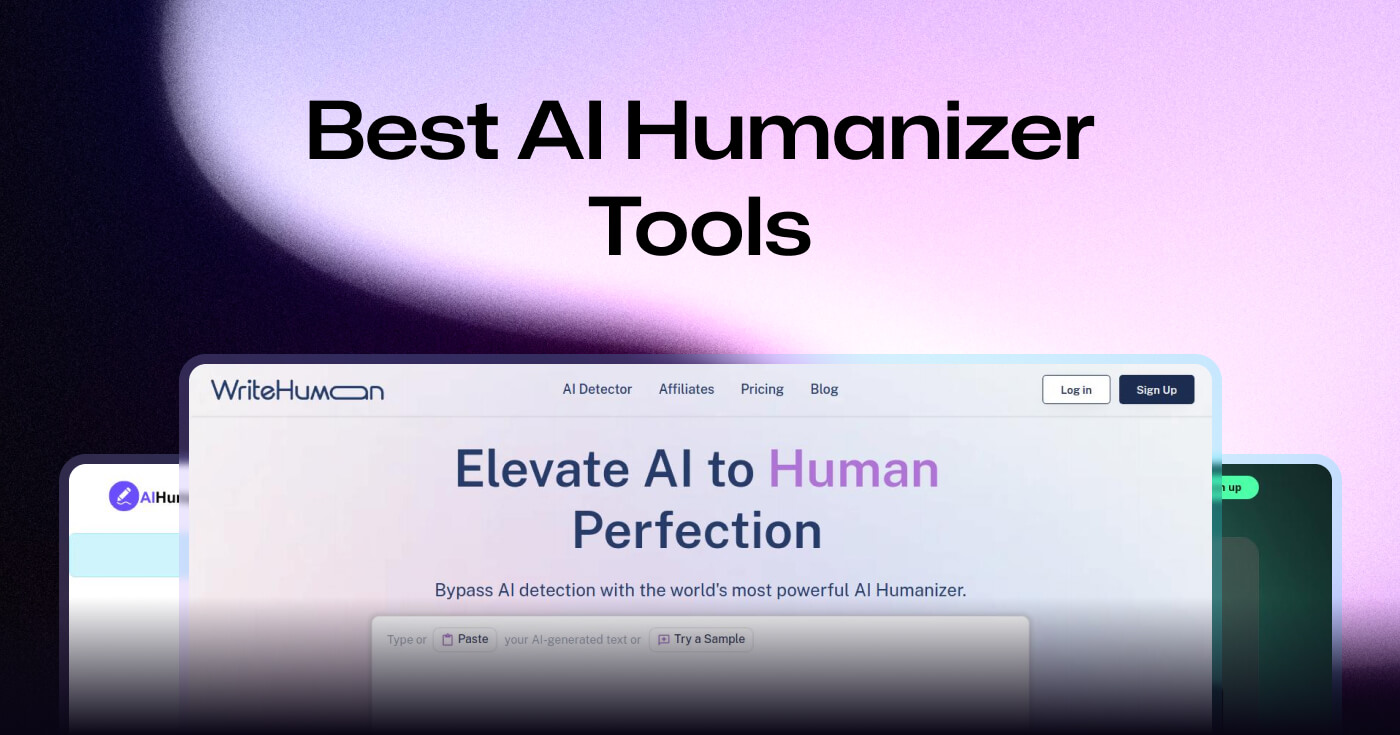
- WriteHuman: Clean interface and clear sliders. Nice for writers who want minimal setup.
How to choose among them:
- If you need API and scale: Undetectable AI or HideMyAI.
- If you want detector plus humanizer in one: Originality.AI Humanize.
- If you prefer a quick UI: HIX.AI Humanizer or WriteHuman.
When To Use A Humanizer Versus Real Editing
Use a humanizer when:
– You have a solid draft but the tone feels “AI‑flat.”
– You need to smooth rhythm and vary sentence length.
– You want a quick first pass before a human review.
Use real editing when:
- The draft has weak structure or thin ideas.
- You need deep brand voice or storytelling.
- The stakes are high, like legal, medical, or academic work.
A good metaphor: Think of a humanizer as a noise filter for audio. It reduces static but cannot fix a bad song. Start with a strong draft, then polish.
Risks, Ethics, And Compliance
Let’s be clear. Detectors are imperfect. Independent studies have found high false positives and bias against non‑native English writers. Some platforms also restrict AI‑assisted writing. Be sure to follow your school or company policy.
Best practices:
- Be transparent when required by policy.
- Keep change logs for regulated content.
- Verify facts and sources; do not mask plagiarism.
- Use humanizers as style tools, not as a way to cheat.
I’ve seen teams get better results when they disclose their workflow, use human review, and keep quality controls. Trust grows when you show your process.
How To Get The Most Human Output
Try this step‑by‑step workflow:
– Draft with a strong outline. Clarity first, style second.
– Humanize on a moderate setting. Avoid max levels at first.
– Read it aloud. Fix awkward phrases and pacing.
– Add voice cues. Insert tiny “you,” “we,” or story touchstones.
– Verify facts, numbers, and quotes.
– Run a final detector pass only as a sanity check, not a gate.
Small tweaks matter. A single added example or a short story often does more than any slider.
Common Mistakes To Avoid
– Over‑humanizing: Too many changes can warp meaning.
– Chasing one detector: Test across a few, and value human judgment more.
– Skipping fact checks: Humanizers do not fix wrong facts.
– Ignoring voice: Set tone before you humanize; you’ll get better results.
– Using the same prompt for every piece: Tailor inputs to the goal.
Frequently Asked Questions Of What Is The Best AI Humanizer Tool
Q. Does any AI humanizer guarantee a pass on all detectors?
No. Detector models vary and change. Use a humanizer plus a light human edit for the best odds, but expect variance.
Q. Is using an AI humanizer ethical?
It depends on context. For marketing and personal writing, it is often fine. For schools or regulated fields, follow policy and disclose when required.
Q. Which tool balances quality and control the best?
In my tests, Undetectable AI offered the best mix of meaning retention, tone control, and cross‑detector results.
Q. Will a humanizer fix factual errors?
No. It smooths style, not truth. Always verify facts, numbers, quotes, and names.
Q. What settings should I start with?
Begin with moderate humanization and your target tone. Then read it aloud and make small edits. Only increase strength if it still feels flat.
Q. Can I use these tools at scale for agencies?
Yes. Look for batch features and an API. Undetectable AI and HideMyAI are good starts for teams.
Conclusion
The best AI humanizer tool is the one that keeps your meaning intact, fits your workflow, and stays honest about limits. For most users, Undetectable AI checks those boxes with strong control and steady results. Use it as a polish, not a disguise, and pair it with fast human edits and fact checks.
Pick one tool, set moderate levels, and try the read‑aloud test today. You’ll spot what to trim in minutes. Want more? Subscribe for fresh guides, or drop a comment with your use case so I can suggest a setup that fits.