
I’ve spent years building, buying, and advising on B2B SaaS. I’ve seen what works, what fails, and what scales. Here is the short answer to what is a b2b saas company: it is a business that sells cloud software to other businesses on a subscription. It runs on the web, updates often, and integrates with tools you already use. If you want a clear, friendly guide that goes deep and stays practical, you’re in the right place.

Source: www.marketermilk.com
What Does A B2B SaaS Company Do?
A B2B SaaS company delivers software to other companies over the internet. You pay a recurring fee. You access it through a browser or app. No servers to manage. No big installs. Updates are automatic.
These products solve business problems. Think sales tracking, payroll, analytics, or security. The vendor hosts the app in the cloud. They handle uptime, backups, and patches. You focus on your work.
Common examples include CRM, marketing automation, HR tools, data platforms, help desks, and developer tools. The value comes from fast setup, lower upfront cost, and steady improvements.

Source: www.softformance.com
Core Components And Business Model
Winning B2B SaaS companies share a simple model. Build one product. Sell it many times. Improve it often. Keep customers happy so they stay and grow.
Key elements you should know:
- Revenue model: Usually subscription. Monthly or annual. Plans by seats, features, or usage.
- Pricing patterns: Per user, per unit, tiered plans, or usage-based billing.
- Go-to-market models: Sales-led, product-led, or a mix. Product-led tries to let the product sell itself with free trials.
- Customer success: A team that helps customers adopt, get value, and expand. This reduces churn.
- Integrations: Connect to tools like Google Workspace, Microsoft 365, Salesforce, QuickBooks, Slack, or Zapier.
- Metrics that matter: ARR, MRR, net revenue retention, gross margin, churn rate, CAC, LTV, payback period.
- Security and trust: SOC 2, ISO 27001, GDPR, HIPAA where needed. Single sign-on and audit logs.
Why this model works:
- Predictable revenue from subscriptions.
- Fast feedback loops from usage data.
- Lower total cost of ownership for buyers versus on-prem software.
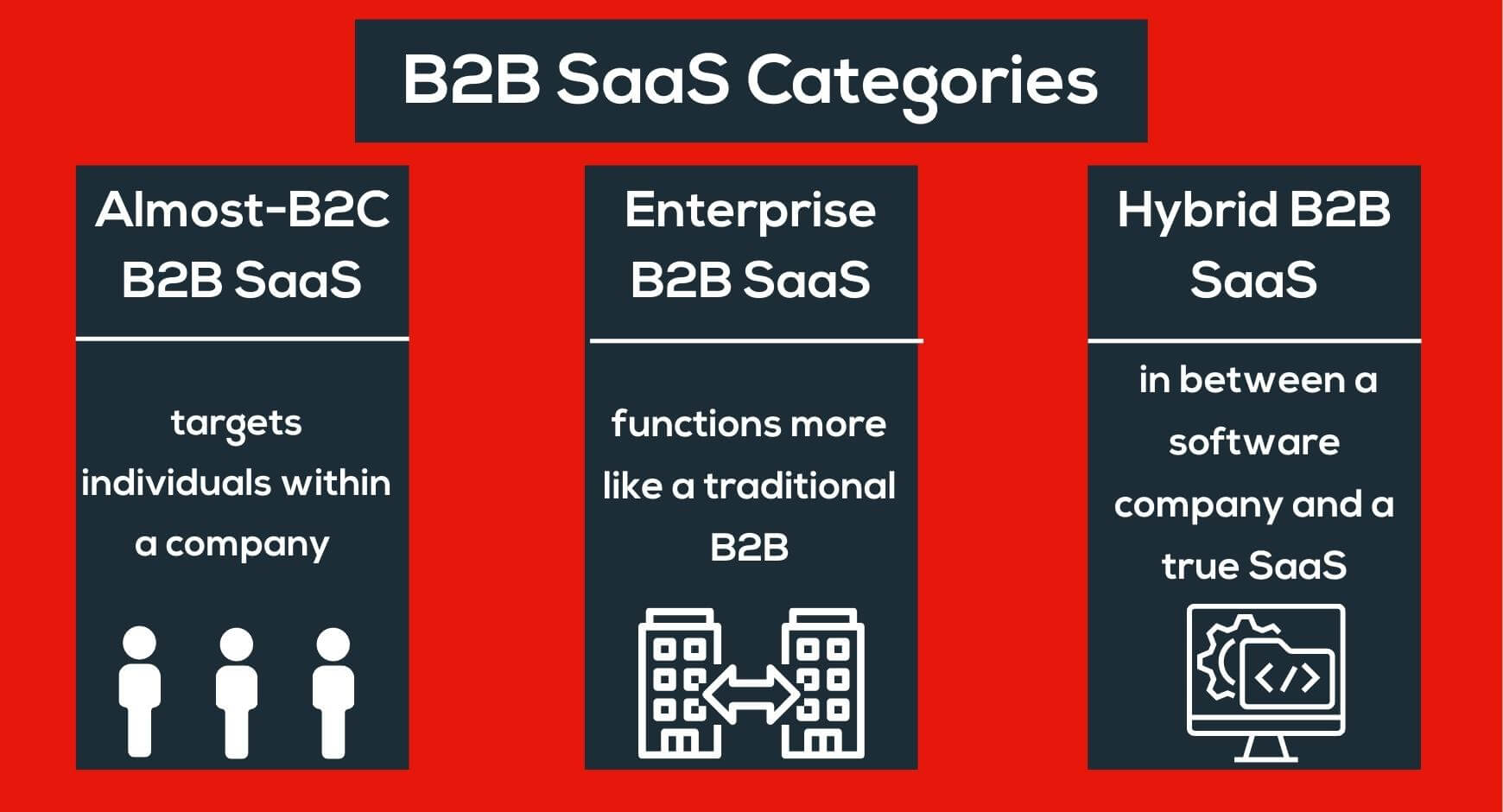
Based on industry benchmarks, top SaaS firms target net revenue retention above 110 percent, gross margins above 70 percent, and a CAC payback within 12 months for mid-market deals. These are not hard rules, but they are good targets.
Source: augurian.com
Real-World Examples And Use Cases
Here are known B2B SaaS categories and where they shine:
- CRM and revenue: Salesforce, HubSpot. Track leads and deals. Forecast revenue.
- Collaboration and comms: Slack, Zoom. Keep teams aligned.
- Data and analytics: Snowflake, Looker. Centralize data. Build dashboards.
- IT and security: Okta, Duo, Cloudflare. Manage identity and access. Protect users.
- Finance and ops: NetSuite, Xero, Stripe. Run accounting and payments.
- Support and success: Zendesk, Intercom. Manage tickets and chat.
- Dev and product: GitHub, Atlassian. Ship code. Track work.
A quick story from my work: we moved from spreadsheets to a SaaS CRM in one quarter. Ramp time fell from weeks to days. Our forecast errors dropped by half. The tool gave us one source of truth. We did make one mistake. We skipped admin training. That led to messy fields and slow reports. We fixed it with a clear data plan, role-based access, and weekly audits.
Use cases you can start with:
- Build a real-time sales pipeline dashboard.
- Automate onboarding emails and in-app guides.
- Centralize support tickets and measure response times.
- Sync data across finance, CRM, and analytics.
Source: mailshake.com
Benefits And Challenges
Benefits for buyers:
- Lower upfront costs. No hardware. One monthly or yearly bill.
- Faster setup. Start in hours or days, not months.
- Regular updates. New features roll out without downtime.
- Better security posture. Most vendors invest in audits and controls.
- Easy scale. Add users or capacity as you grow.
Benefits for vendors:
- Predictable revenue with subscriptions.
- Usage data for product decisions.
- Global reach with a cloud-native stack.
Common challenges:
- Vendor lock-in. Plan your exit strategy and data export.
- Integration debt. Too many tools can create silos.
- Shadow IT. Teams buy tools without IT approval.
- Compliance needs. Regulated industries need extra care.
- Churn risk. If customers do not see value fast, they leave.
Practical fixes:
- Ask for data export formats and SLAs up front.
- Use an identity provider for single sign-on.
- Map your data flows. Keep a system of record for each domain.
- Track time-to-value. Aim for the first win in the first week.
How To Evaluate A B2B SaaS Vendor
Use a simple, repeatable checklist:
- Problem fit: Does it solve a must-have need? Define success metrics first.
- Ease of use: Run a hands-on trial. Test the core workflows end to end.
- Integration: Check native connectors and APIs. Test with your data.
- Security and compliance: Ask for SOC 2 or ISO 27001. Review data storage, backups, and access logs.
- Performance: Check uptime history and status page. Test from your regions.
- Pricing: Model total cost. Include seats, add-ons, and overage fees.
- Support: Review SLAs and support hours. Ask about onboarding and training.
- Data ownership: Confirm export options and data retention terms.
- References: Speak with customers of similar size and industry.
- Roadmap: Align on features and timelines. Avoid betting on promises.
I like to run a 30-day pilot with one team. We set clear goals. We define what “go live” means. We document what breaks and how fast support responds. This keeps the decision grounded in reality.
Building A B2B SaaS Company: Lessons From The Trenches
Here is what I wish I knew earlier:
- Pick a painful, narrow problem. Win a niche before you expand.
- Ship a simple product that solves one job well. Remove features often.
- Instrument everything. Track activation, usage, and churn reasons.
- Make onboarding a product, not a PDF. Use checklists and in-app guides.
- Price by value. Align plans to outcomes, not just features.
- Invest in customer success early. It pays for itself through expansion.
- Build trust with audits, clear policies, and fast incident response.
- Write a public changelog. Customers love visible progress.
Common mistakes to avoid:
- Selling custom features to every big lead. This creates a support tax.
- Ignoring integrations. Your app lives in a stack, not a silo.
- Underestimating data migration. Plan it like a mini project.
- Skipping documentation. It cuts support tickets by a lot.
One of my launches stalled because we hid the paywall. Users loved the free tier but never upgraded. We fixed it by adding clear upgrade prompts after value moments. Conversions doubled in two weeks.
Trends And The Future Of B2B SaaS
The market keeps moving fast. Here is what to watch:
- AI as a co-pilot: Suggestions, summaries, and automation baked into workflows.
- Product-led growth at scale: Self-serve trials plus sales for bigger deals.
- Usage-based pricing: Pay for what you consume. Fair and flexible.
- Vertical SaaS: Deep tools for one industry, like healthcare or logistics.
- Data gravity and security: Privacy by design and strong governance.
- Composable stacks: APIs and microservices that swap in and out with ease.
What this means for buyers:
- Expect smart features that save time.
- Plan for data governance and access control.
- Push vendors on cost transparency and ROI.
What this means for founders:
- Win by owning a workflow, not just a feature.
- Make integration and security a core capability.
- Show value in minutes, not weeks.
Frequently Asked Questions Of What Is A B2B SaaS Company
Q. What Is The Difference Between B2B SaaS And B2C SaaS?
B2B SaaS sells to organizations. It focuses on team workflows, security, and compliance. B2C SaaS sells to individuals. It focuses on personal use and simple pricing.
Q. How Do B2B SaaS Companies Make Money?
They charge recurring fees. Plans can be per user, per feature, or usage-based. Many also sell add-ons like premium support or advanced analytics.
Q. What Metrics Matter Most In B2B SaaS?
Key metrics include MRR or ARR, churn rate, net revenue retention, CAC, LTV, and payback period. These show growth, efficiency, and customer health.
Q. How Long Does It Take To Implement A B2B SaaS Tool?
Simple tools can be live in days. Complex systems like ERP or data platforms can take weeks or months. Good onboarding and clear scope speed things up.
Q. Is B2B SaaS Secure Enough For Regulated Industries?
Yes, if the vendor meets needed standards. Look for SOC 2, ISO 27001, and relevant rules like HIPAA or GDPR. Review data handling and audit logs.
Wrap-Up And Next Steps
A B2B SaaS company sells cloud software to businesses on a subscription. The best vendors solve clear problems, integrate well, and earn trust with strong security and support. As a buyer, start with your use case and metrics. As a founder, focus on fast value and happy customers. Take one step today. Run a trial. Map your stack. Or write a simple onboarding plan.
Want more practical guides like this? Subscribe for updates or leave a comment with your next question.