
I help SaaS teams find growth they can keep. I have shipped embedded payments, cards, and lending in real products. I have seen what works and what breaks. In this guide, I explain what are the benefits of embedded finance for SaaS platforms. You will learn how it drives new revenue, better margins, and loyal users. I will keep it clear, honest, and useful.

Source: spaceinvoices.com
What Is Embedded Finance For SaaS?
Embedded finance lets a SaaS platform offer money services inside its product. Think payments, wallets, cards, loans, and insurance. Users do not leave your app to pay, get paid, or access credit. The finance layer blends into the workflow.
Here is a quick frame:
- Payments. Accept cards, ACH, bank transfers.
- Payouts. Send funds to vendors, creators, or staff.
- Wallets. Store balance, split funds, manage cash.
- Cards. Issue virtual or physical cards for spend.
- Lending. Offer working capital or BNPL.
- Risk. KYC, KYB, fraud checks, and compliance.
Why it matters: it lowers friction. It also adds new revenue lines for SaaS.
Source: www.weavr.io
Core Benefits For SaaS Platforms
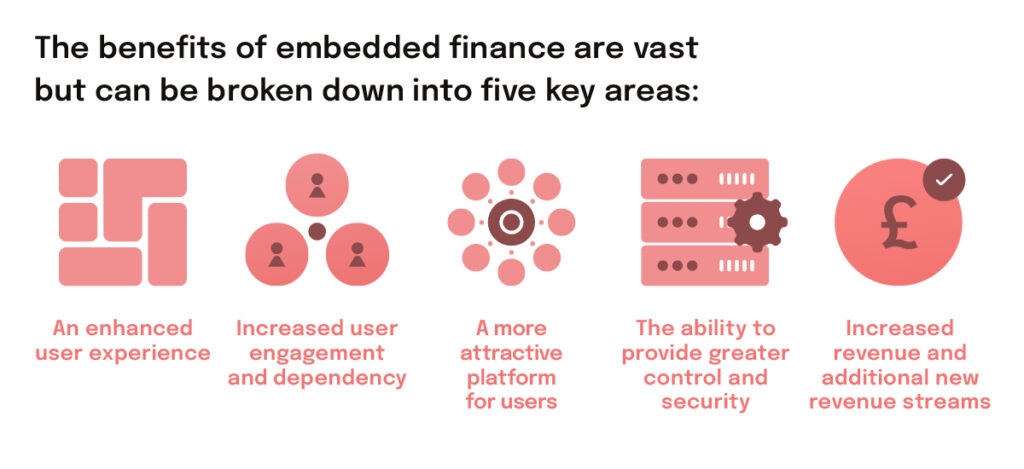
The value is both money and moat. It can lift revenue. It can cut churn. It can raise LTV and ARPU. It can make your product hard to replace.
Top benefits:
- New revenue streams. Earn payments margin, interchange, lending spread, and partner rev share.
- Higher ARPU and LTV. Finance ties to core use. Users do more in your app. They stay longer.
- Lower churn. Money flows are sticky. Offboarding is costly for users once they trust you with funds.
- Better conversion and activation. Fewer steps to pay or get paid means faster time to value.
- Product differentiation. Finance inside the workflow beats a link out to a third party.
- Operational efficiency. Reconcile, invoice, and automate payouts in one place.
- Richer data. Cash flow data improves risk, upsell, and support.
From my own launches, a clean embedded pay flow cut onboarding drop-off by 20 to 30 percent. It also raised day-30 retention by a few points. Those points compound.

Source: spaceinvoices.com
Revenue Models And Unit Economics
Let’s break the money side into parts. Keep it simple and track each slice.
Common revenue levers:
- Payments take rate. Keep a share of the processing fee. Even 20 to 70 basis points add up at scale.
- Interchange on cards. Earn a slice when users spend with your issued cards.
- Lending spread. Share interest or fees on capital advances or BNPL.
- Float and treasury yield. Earn on held balances where allowed.
- Value added services. Charge for invoicing, chargeback help, and faster payouts.
Simple example:
- You process $50M a month at a 40 bps net take. That is $200K a month gross margin from payments.
- If 10 percent of users adopt cards and spend $10M a month, interchange adds a new stream.
- If 5 percent use working capital, lending fees can rival payments, with higher risk.
Key costs to watch:
- Processing costs. Vary by card mix and geography.
- Fraud and chargebacks. Use tools and rules to keep loss rates low.
- Support and ops. Disputes, KYC reviews, payouts.
- Compliance. KYC, KYB, AML, PCI, and audits.
Aim for positive unit economics by cohort. Track margin after fraud and support.
Source: www.solarisgroup.com
Customer Experience And Retention Impact
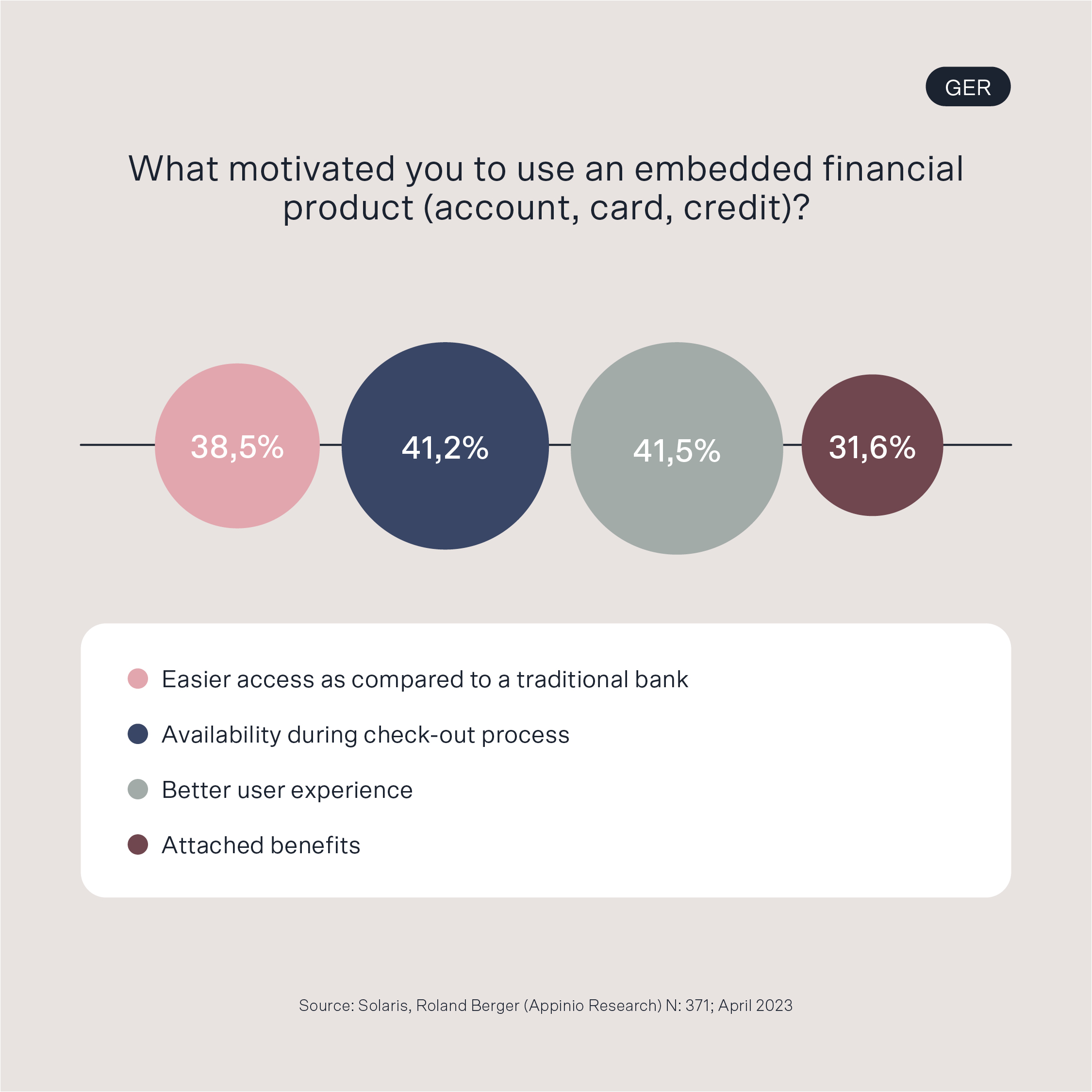
Money is about trust and speed. Good embedded flows feel simple and safe. If you remove steps, you win.
What helps users:
- Fewer redirects. Keep users inside your app.
- One KYC/KYB flow. Fast, clear, and mobile ready.
- Instant payouts and clear fees. Users like choice and speed.
- Smart defaults. Auto reconcile, auto tax, and simple dashboards.
- Local rails. Offer local methods to lift conversion in each market.
What I learned the hard way:
- A long KYB form kills signups. Use staged checks. Ask less upfront.
- Clear error messages cut tickets. Vague errors cause churn.
- Show payout status and ETA. Silence breeds fear.
- Let users test with $1. It builds trust fast.
Small lifts in ease can move retention. In one case, instant payouts raised NPS by 12 points. Churn fell in the next quarter.

Source: ffnews.com
Data, Risk, And Compliance Considerations
Finance is a trust business. Respect rules and user safety. It is also a data flywheel if you do it right.
Data benefits:
- Cash flow signals. Predict who will grow or churn.
- Risk scoring. Use platform data to cut fraud.
- Pricing and offers. Tailor fees and lending to segments.
Risk and compliance basics:
- KYC/KYB. Know your users and businesses. Use tiered checks.
- AML and sanctions. Screen and monitor flows.
- PCI and data security. Tokenize and limit scope.
- Disputes and chargebacks. Have playbooks and SLAs.
- Regional rules. Each market has its own norms.
Practical tips:
- Work with a strong BaaS or payments partner. Share roles in writing.
- Build a risk review queue and metrics. Track approval rate, false positives, loss rate.
- Keep audit trails. Make exams painless.
- Be honest in UX about fees and limits.
Industry studies show embedded finance can boost revenue and loyalty when done with strong controls. It is not risk free. Treat it like core infra.

Source: www.biz2x.com
Implementation Playbook For SaaS Teams
You want speed and safety. Ship in steps. Learn as you go.
A simple plan:
- Define goals. Pick one or two KPIs. For example, lift ARPU by 10 percent.
- Start with payments. Add cards or payouts next. Add lending last.
- Choose partners. Evaluate uptime, coverage, fees, and risk tools.
- Design the flow. Map every click. Remove redirects.
- Pilot with a segment. Get feedback. Fix edge cases.
- Train support and sales. Create scripts and FAQs.
- Launch in waves. Measure and iterate.
Team roles:
- Product owns UX and metrics.
- Risk owns policies and rules.
- Eng owns integration and data.
- Legal and compliance own reviews and audits.
- Ops and support own tickets and SLAs.
Tools that help:
- Feature flags and A/B tests.
- Observability to track declines and latency.
- Playbooks for outages and disputes.
Real-World Examples And Personal Lessons
I worked with a vertical SaaS for field services. They added embedded payments first. They kept 35 basis points net. Within six months, 60 percent of active users adopted it. ARPU rose 18 percent. Churn fell 2 points. Support volume rose at first, then fell after we improved error texts and added a payout ETA card.
Another case was a marketplace. We built split payouts and issued virtual cards for expenses. Interchange paid for the cost of support. Fraud spiked at launch week. We fixed it with velocity rules and device checks. Loss rates dropped below 8 bps after month two.
What I would do again:
- Launch with one method and crush the UX.
- Show value on day one. Example: first payout free or faster.
- Invest early in risk. Bad actors move fast.
What I would avoid:
- Big bang launches across all markets.
- Hidden fees. They backfire and draw complaints.
- Long KYC forms with no save state.
How To Measure ROI And Success
Pick a few metrics. Track them weekly. Share them across the team.
Core metrics:
- Adoption rate. Percent of active users using finance.
- Revenue per user. ARPU with and without finance.
- Take rate. Net margin after costs and losses.
- Retention and churn. Compare cohorts pre and post launch.
- Time to payout. Speed builds trust.
- Approval rates. For KYC and lending.
Simple targets for year one:
- 30 to 50 percent of active users adopt payments.
- 10 to 20 percent ARPU lift for users who adopt.
- Loss rates under 10 bps for cards if your mix is low risk.
Use dashboards and alerts. Fix issues fast. Celebrate wins with real user stories.
Frequently Asked Questions Of What Are The Benefits Of Embedded Finance For SaaS Platforms
Q. What Counts As Embedded Finance In A SaaS App?
It is any money service inside your product. It can be payments, payouts, wallets, cards, lending, or insurance. Users do not leave your app to use it.
Q. How Does Embedded Finance Increase Revenue?
You earn from payment margins, interchange on cards, lending spreads, and value added services. It also raises ARPU by making users do more inside your app.
Q. Is Embedded Finance Only For Large SaaS?
No. Vertical SaaS with tight workflows can win big. Start small with payments. Add more as you scale.
Q. What Are The Main Risks?
Fraud, chargebacks, compliance gaps, and bad UX. Reduce risk with strong KYC/KYB, fraud tools, clear fees, and good support.
Q. How Long Does Implementation Take?
A basic payments MVP can ship in 6 to 12 weeks with a good partner. Cards and lending take longer due to risk and compliance work.
Q. Do We Need A Banking License?
Most SaaS firms partner with payment processors and sponsor banks. They do not hold a license. They follow partner rules and laws.
Q. How Do We Pick The Right Partner?
Check uptime, coverage, fees, support, fraud tools, and roadmap. Run a sandbox test. Talk to reference customers.
Conclusion
Embedded finance can turn your SaaS into the place where work and money meet. The benefits are clear. You get new revenue streams. You get higher ARPU and stronger retention. You remove friction and build trust. Start with one flow. Make it simple and safe. Measure what matters, then add more.
If you are ready, pick one KPI and scope a 90 day pilot. Your users will feel the difference, and your numbers will show it. Want more guides like this? Subscribe, share your questions, or leave a comment below.