
If you run a subscription product, you’ve likely heard about Net Revenue Retention (NRR). I’ve led growth and revenue ops teams across different SaaS stages, and I can tell you this: understanding what is nrr in saas separates teams that guess from teams that win. NRR shows how much revenue your existing customers bring in after upsells, downgrades, and churn. When I audit a SaaS business, it’s the first number I check to judge product-market fit, pricing, and customer success health. Let’s break it down with clear steps, real examples, and practical tips you can use today.

Source: www.facta.io
What Is NRR In SaaS?
NRR, or Net Revenue Retention, tells you how your revenue from existing customers changes over time. It includes expansion from upsells and cross-sells. It also subtracts revenue lost from downgrades and churn.
Think of NRR as a health score for your current base. If NRR is above 100%, your base is growing even before you close new deals. If it’s below 100%, your base is shrinking and you need to fix retention or value delivery.
NRR answers a simple question: if you froze new sales today, would your revenue grow or shrink next month or next year?

Source: www.wallstreetprep.com
How To Calculate NRR
Use this simple formula for a period, like a month or a quarter:
– Start with beginning revenue from existing customers.
– Add expansion revenue from those same customers.
– Subtract downgrades and churned revenue.
– Divide by the starting revenue, then multiply by 100.
Example:
- Starting revenue from existing customers: $100,000
- Expansion (upsells, cross-sells): $20,000
- Contractions (downgrades): $5,000
- Churned revenue: $10,000
- NRR = (100,000 + 20,000 − 5,000 − 10,000) ÷ 100,000 × 100 = 105%
That 105% means your existing base grew 5% without any new customers.

Source: www.wallstreetprep.com
Why NRR Matters More Than You Think
NRR compounds like interest. A business at 120% NRR doubles its existing-customer revenue in about three years without adding new logos. That creates steady growth and strong unit economics.
High NRR also signals:
- Product-market fit at scale. Users find more value over time.
- Strong pricing and packaging. Clear upgrade paths boost expansion.
- Healthy onboarding and success motions. Customers adopt, expand, and stay.
Investors and operators watch NRR because it predicts durable growth and lowers reliance on costly acquisition.

Source: www.wallstreetprep.com
Benchmarks: What Good Looks Like
Benchmarks vary by segment, price, and market. Industry data commonly shows:
– SMB-focused SaaS: 90% to 105% NRR is typical. 110% is strong.
– Mid-market: 100% to 115% is common. 115%+ is great.
– Enterprise: 110% to 130%+ is world-class, due to larger expansion.
Two notes:
- Fast-growing, usage-based products often show higher NRR due to natural expansion.
- Early-stage companies may swing more due to churn volatility and small bases.
Use your own cohorts to set targets. Compare apples to apples: same segment, same plan type, and the same time window.
Source: chartmogul.com
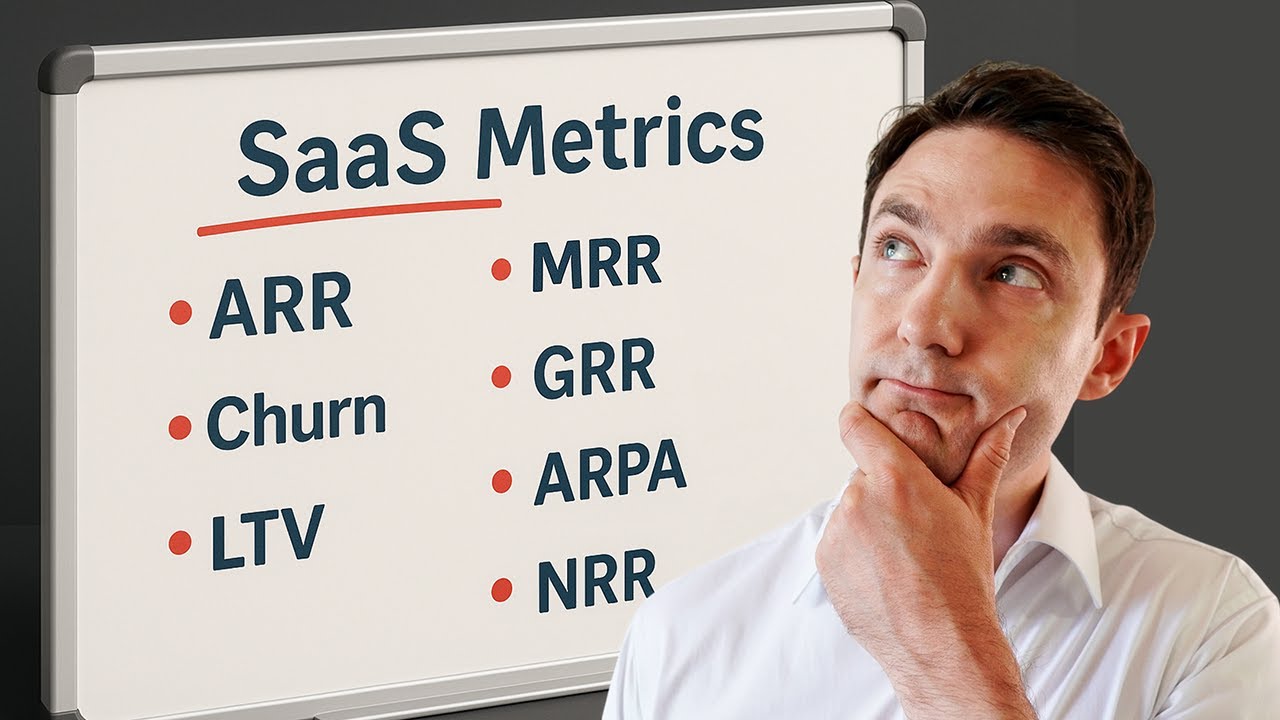
NRR vs GRR vs ARR: Know The Difference
– NRR (Net Revenue Retention): Includes expansion, minus contractions and churn. Can be over 100%.
– GRR (Gross Revenue Retention): Excludes expansion. Only measures how much you keep before upsells. Capped at 100%.
– ARR (Annual Recurring Revenue): Your yearly run-rate across all customers, new and existing.
NRR tells the full story of customer value over time. GRR shows pure retention and product stickiness without expansion. You need both for a clear picture.
Real-World Lessons From The Field
From my time running retention reviews, three patterns kept coming up:
– Expansion follows adoption, not sales pressure. The best upsells happen after users hit real milestones. For one analytics tool, usage of three key features predicted a 40% higher upsell rate within 60 days.
– Price increases work when tied to value metrics. We shifted to usage-based thresholds. Churn did not spike, but expansion rose 12% quarter over quarter.
– Save teams beat last-minute discounts when they focus on outcomes. A structured “success-at-risk” program lowered gross churn 3 points in two quarters.
Mistakes to avoid:
- Pushing upgrades before activation. It boosts short-term revenue but harms NRR later.
- Ignoring downgrade reasons. Downgrades are early churn warnings.
- Measuring NRR without cohorts. Seasonality and acquisitions can mask the truth.
How To Improve NRR: Practical Playbooks
Adopt these plays to lift NRR within two to three quarters:
– Tight onboarding: Define an activation checklist. Trigger help when users stall at key steps.
– Customer success segmentation: High-touch for high ARR. Tech-touch for long tail. Use health scores tied to product usage.
– Value-based pricing and packaging: Create clear upgrade ladders. Align tiers with outcomes, not features alone.
– Expansion triggers: Set alerts for usage thresholds, team invites, or feature adoption. Follow with contextual nudges.
– Renewal workflow: Start 120 days out. Confirm value delivered. Share a roadmap. Bundle value with multi-year options.
– Churn prevention: Run exit surveys. Tag reasons. Build three fixes that address the top 80% of issues.
– Win-back programs: For recently churned accounts, offer a guided relaunch, not a discount.
Simple KPI targets to watch:
- Time to activation
- Product adoption rate for sticky features
- Renewal forecast accuracy
- Expansion pipeline from existing accounts
Measuring NRR The Right Way
Set clear rules so your NRR stays clean and comparable:
– Define the cohort: Existing customers at the start of the period only.
– Pick a period: Monthly, quarterly, or yearly. Be consistent.
– Separate expansion types: Quantity-based, seat-based, feature-based, or usage-based.
– Track downgrades vs churn: Downgrade today often becomes churn tomorrow.
– Exclude one-time fees: Keep it recurring only.
Reporting tips:
- Show NRR by segment, plan, and cohort month. That reveals where to invest.
- Pair NRR with GRR. If NRR is stable but GRR is falling, you’re masking churn with expansion.
- Share trends over six to eight quarters to see true direction.
Common Pitfalls And How To Avoid Them
– Counting new logos as expansion: Only include customers that existed at the start of the period.
– Mixing billing cycles: Normalize monthly and annual plans to the same basis.
– Ignoring currency effects: For multi-currency, fix to a single reporting currency.
– Overlooking partial churn: When a customer drops locations or seats, it’s churned revenue. Track it.
– Not validating data: Audit a sample every month. Small errors can inflate NRR.
A simple safeguard is to automate a reconciliation: starting MRR + new logo MRR + expansion MRR − contraction MRR − churned MRR = ending MRR.
NRR In Usage-Based SaaS
Usage-based pricing can supercharge NRR because value and revenue grow together. But it needs guardrails:
– Set fair floors and caps to avoid bill shock.
– Offer budget alerts and soft limits.
– Educate customers on cost-to-value early.
One team I worked with added proactive alerts at 70%, 90%, and 110% of plan limits. Surprise bills dropped, and NRR rose 7 points in two quarters.
Frequently Asked Questions Of What Is NRR In SaaS
Q. What Is A Good NRR For A SaaS Company?
It depends on your segment. SMB businesses often target 100% to 110%. Mid-market aims for 105% to 115%. Enterprise leaders can reach 120% to 130%+. Use your own cohorts to set realistic targets.
Q. How Often Should I Measure NRR?
Track monthly for early signals and quarterly for strategic trends. Many teams review monthly NRR in ops meetings and quarterly NRR at board level.
Q. Does NRR Include New Customers?
No. NRR only looks at customers who existed at the start of the period. New customers belong in new ARR or new MRR metrics.
Q. Is NRR Or GRR More Important?
Both matter. GRR shows pure retention health. NRR adds expansion. If NRR is strong but GRR is weak, you may be masking churn with upsells.
Q. How Can I Improve NRR Quickly?
Focus on onboarding, adoption of sticky features, renewal readiness, and usage-based expansion triggers. Also fix the top churn reasons you hear at exit.
Q. Should I Include Discounts In NRR?
Yes. NRR should reflect actual billed recurring revenue. If discounts lower recurring price, they affect NRR.
Q. What Time Window Should I Use For NRR?
Pick monthly or quarterly and stay consistent. Many teams run both: monthly for leading indicators, quarterly for strategic decisions.
Wrap-Up And Next Steps
If you remember one thing about what is nrr in saas, make it this: NRR is the clearest signal of product value over time. It ties your pricing, adoption, and customer success into one metric you can act on. Start by measuring it cleanly, then fix adoption, align pricing to value, and build expansion paths that feel natural.
Set a target, share it with your team, and run one play this week to lift NRR. If you want more guides like this, subscribe or leave a comment with your NRR challenges. I’ll help you troubleshoot in future posts.